Date: 1306Language: ArabicOrigin: North AfricaRepository: Bayerische StaatsbibliothekClassmark: BSB Cod.arab.Former Owner: Johann Albrecht WidmanstetterDescription: This outstanding early 14th-century manuscript is the first part of a Qur'an originally comprising 12 volumes, which, according to the colophon, was produced for the Moroccan ruler Abū Yaʾqūb Yūsuf. This text and a companion manuscript, also in the Bavarian State Library (Cod.arab 3), contain, respectively, the first and last five sixtieths of the Qur'an. The text is written in Maghrebi script on parchment, with only seven lines to a page. The well-proportioned balancing of the text area with the wide margins gives the Qur'an its monumental character. Colorful signs indicate the vocalization and golden circles mark the verses. The medallions of the surah headings in the margins are carried out with very delicate arabesque ornaments. Several elegant double-page illuminations open and close the manuscript. Experts rate this manuscript and the companion Cod.arab 3 as among the most outstanding copies of the Qur'an in existence. // Bayerische Staatsbibliothek, Oriental and Asia Department, 2019IIIF Manifest:https://api.digitale-sammlungen.de/iiif/presentation/v2/bsb00047627/manifest
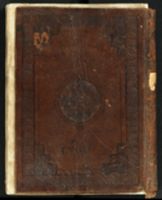
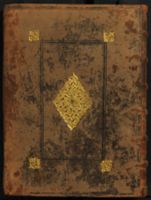
Date: 1306Language: ArabicOrigin: North AfricaRepository: Bayerische StaatsbibliothekClassmark: BSB Cod.arab. 3Former Owner: Johann Albrecht Widmanstetter (1506-1557)Description: This outstanding manuscript contains the last part of a precious Qur'an originally comprising 12 volumes, which, according to the colophon in the last part of the Qur'an, was produced for the Moroccan Marinide ruler Abū Ya'qūb Yūsuf Ibn Ya'qūb (reigned 1286-1307). The manuscript contains surat (chapters) 1-3, 14, and 62-114 and, respectively, the first and last five hizb (small sections, or sixtieths) of the Qur'an. The Qur'an was written in black ink in Maghribi script, which had spread in the 10th century from Tunisia through Algeria and Morocco to Spain. The monumental character of this manuscript results from the well-proportioned balancing of the text area, with only seven lines to a page, and the broad margins. The text is enriched by colorful signs that indicate the vocalization and by golden circles that contain the number of the verses. The letter ha', stylized to resemble a raindrop, refers to five verses. The saying la 'ilaha 'illa Allah (There is no god but God) is emphasized in golden thuluth script. The surah headings are written in golden Kufic, some of which are additionally set into decorated panels surrounded by strap-work or palmette frames. The medallions of the surah headings in the margins are executed with very delicate arabesque ornaments. Several elegant double-page illuminations open and close the manuscript. Experts rate this manuscript as among the most outstanding copies of the Qur'an. The dominant feature of the original binding is a star pattern with gilded lines. The manuscript came from the collection of Johann Albrecht Widmanstetter to the Munich Court Library, the present-day Bavarian State Library. // Bayerische Staatsbibliothek, Oriental and Asia Department, 2019IIIF Manifest:https://api.digitale-sammlungen.de/iiif/presentation/v2/bsb00047628/manifest
Date: 1078-1079Language: ArabicOrigin: North AfricaRepository: Bayerische StaatsbibliothekClassmark: BSB Cod.arab. 802Former Owner: Johann Albrecht Widmanstetter (1506-1557)Description: Inhalt: Das Buch der Siebensachen" (nicht wie zu Anfang der Handschrift steht "de morborum septimanis diebus"), ein unterschobenes Werk des Hippocrates, mit einem Kommentar des Galenus, angeblich ins Arabische übersetzt vom Arzt Isḥāq Ibn-Ḥunain. Die Grundidee, die der unbekannte Verfasser verfolgte, ist die Darstellung des Menschen als einer Welt im Kleinen. Die Einteilung in der Ausführung beruht auf der Zahl sieben. Die ganze Welt bestehe aus sieben Teilen, ebenso die Erde, ebenso der Mensch etc. Der letzte Teil, der von den Fiebern, von der natürlichen Wärme und Kälte, von der Feuchtigkeit und Trockenheit als den Materien spricht, durch die und in denen sich Krankheiten entwickeln, ist noch am meisten medizinisch.IIIF Manifest:https://api.digitale-sammlungen.de/iiif/presentation/v2/bsb00047640/manifest
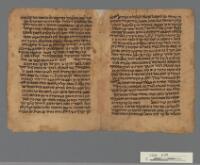
Date: 1488Language: ArabicOrigin: North AfricaRepository: Bayerische StaatsbibliothekClassmark: BSB Cod.arab. 342Former Owner: Johann Albrecht Widmannstetter (1506-1557)Description: Inhalt: Kommentar des Malikiten Ibn-al-Faḫḫār al-Ǧuzāmī zum Rechtsbuch Risālat Ibn-Abī-Zaid des Ibn-Abī-Zaid al-Qairawānī. Der Titel des Kommentars ist am Ende genannt: Naṣḥ al-maqāla fī šarḥ ar-risāla. Am Schluss auf zwei Seiten ein Exzerpt (Masaʾila min Kitāb Ibn-Rušd fī māšiya takūna marīḍa) und verschiedene Verse.IIIF Manifest:https://api.digitale-sammlungen.de/iiif/presentation/v2/bsb00095499/manifest
Date: 1000-1099?Language: ArabicOrigin: North AfricaRepository: Bayerische StaatsbibliothekClassmark: BSB Cod.arab. 4Description: Schrift: Marokkanisch. Die Überschriften kufisch, sehr klein geschrieben, durch und durch reich mit Gold geziert. Die Buchstaben Tāʾ, Ḥāʾ und Kāf in blauer Farbe. Mit zahlreichen Verzierungen.IIIF Manifest:https://api.digitale-sammlungen.de/iiif/presentation/v2/bsb00117587/manifest
Date: 1659-1660Language: ArabicOrigin: North AfricaRepository: Bayerische StaatsbibliothekClassmark: BSB Cod.arab. 617Former Owner: Antoine-Isaac Silvestre de Sacy (1758-1838) | Étienne Quatremère (1782-1857)Description: Die Abschrift ist von dem christlichen Arzte Abdulmuhsin Ibn Lutfallah aus Qairowân vom J. 1070IIIF Manifest:https://api.digitale-sammlungen.de/iiif/presentation/v2/bsb00130221/manifest
Author: Joseph b. Judah Ibn ʿAqninDate: 900-1599Language: Hebrew | Judaeo-ArabicMaterial: PaperOrigin: North AfricaRepository: Cambridge University LibraryClassmark: L-G Arabic 2.59Former Owner: Gibson, Margaret Dunlop | Lewis, Agnes SmithDescription: Pages from the Al-Inkišāf al-Asrār (‘The Revealing of Secrets’), a philosophical commentary on the Song of Songs by Joseph b. Judah Ibn ʿAqnin, a follower of Maimonides from Morocco (d. 1226). Commentary on Song of Songs 1:2-5.IIIF Manifest:https://cudl.lib.cam.ac.uk/iiif/MS-LG-ARABIC-00002-00059
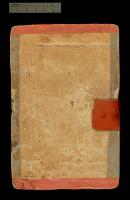
Author: Jazūlī, Muḥammad ibn Sulaymān, d. 1465Date: 1900-1999Language: ArabicMaterial: PaperRepository: Cambridge University LibraryClassmark: MS Or.2251Description: A late African copy of the Dalā'il al-khayrāt, a 'manual' composed of blessings and prayers for everyday life and in particular for the pilgramige to Mecca. Partly composed of selections from the Qur`an and sayings of the prophet, the original work is attributed to the Sufi Muḥammad ibn Sulaymān al-Jazūlī (d. 1465 CE), who lived in in Marrocco . This text has been copied by hand throughout the Islamic world from North West Africa to South East Asia until the last century, with many copies containing illuminations and illustrations. The present manuscript is an example of an originally unbound copy, held together by a string, which is attached to the cardboard cover, probably self made or comissioned by the last owner of the book. The text is clear and in the right order. Not containing illustration, it is an evidently used copy, bearing witness of a tradition of manuscript production common to its region of descent.IIIF Manifest:https://cudl.lib.cam.ac.uk/iiif/MS-OR-02251
Author: Muḥammad ibn ʻAbd Allāh, Sultan of Morocco, -1790 | محمد بن عبد اللهDate: 1780-1899Language: ArabicMaterial: PaperOrigin: MoroccoRepository: Princeton University LibraryClassmark: Islamic Manuscripts, Garrett no. 737HFormer Owner: Garrett, Robert, 1875-1961Description: Collection of ḥadīths. The text is followed on fol. 188b-189b by a short text by the author explaining the reason for designating himself as Mālikī and Ḥanbalī, entitled: "Faṣl fī bayān qawlī fī al-tarjamah al-Mālikī madhhaban al-Ḥanbalī iʻtiqādan", comprising a statement about belief according to Abū Ḥanīfah, Mālik, al-Shāfiʻī and Ibn Ḥanbal. According to the end of the text, the composition was completed in the second month of the year 1198 [Dec. 1783-Jan. 1784] (fol. 189b).IIIF Manifest:https://figgy.princeton.edu/concern/scanned_resources/5698dddd-967e-4e5a-a26e-1643d673d569/manifest
Date: 1800-1899Language: ArabicMaterial: PaperRepository: Princeton University LibraryClassmark: Islamic Manuscripts, Garrett no. 1045HFormer Owner: Garrett, Robert, 1875-1961Description: A collection containing two works on Moroccan Sufism and Sufis. 1. fol. 1b-114b: Shawr al-ṭawīyah fī madhhab al-Ṣūfīyah / [al-ʻArabī ibn Aḥmad al-Sharīf al-Darfāl]. A record of discourses on Ṣūfī theology delivered by Abū al-Ḥasan ʻAlī ibn ʻAbd al-Raḥmān al-ʻImrānī, whom the author first met in Fās in 1182/1768 or 9. 2. fol. 117b-148a: al-Irshād wa-al-tibyān fī radd mā ankarahu al-ru'asā' min ahl Tiṭwān / Muḥammad ibn Muḥammad ibn ʻAbd Allāh al-Makkūdī. A work protesting the ill-treatment and the persecution of the Ṣūfīs in Tiṭwān by the ʻulama of the city.IIIF Manifest:https://figgy.princeton.edu/concern/scanned_resources/56b48e9f-2d07-4068-a9da-07d9ba4f103b/manifest
Author: דוד קאזיס | יוסף גבאי | מסעוד ארוואח בר יוסף | סעדיה שוראקי | שלום בן צורDate: 1801-1900Language: Aramaic | Hebrew | Judaeo-ArabicMaterial: PaperOrigin: Essaouira, MoroccoRepository: Bibliothèque nationale de FranceClassmark: Hébreu 1447IIIF Manifest:https://gallica.bnf.fr/iiif/ark:/12148/btv1b10551160s/manifest.json
Date: 1603-1785Language: ArabicRepository: Bibliothèque nationale de FranceClassmark: Arabe 6100Description: Recueil de pièces officielles diplomatiques et de lettres privées, formé de pièces qui étaient conservées dans des cartons, à la fin du fonds arabe, et dont les plus importantes ont trait aux affaires de la France en Orient. Écritures de toutes sortes, orientales et maghrébines. - 105 pièces reliées en un volume in-folio.IIIF Manifest:https://gallica.bnf.fr/iiif/ark:/12148/btv1b52501251z/manifest.json
Author: Aboul-Qāsim ibn ʿAbbas al-Nahrawi | Aboul-ʿAbbas Ahmad ibn Mahdi al-Ghazzal al-Fasi al-Andalousi | Ibn al-ʿAwwām al-Išbīlī, Yaḥyā ibn Muḥammad (....-1185?)Date: 1778-1779Language: ArabicOrigin: MaghrebRepository: Bibliothèque nationale de FranceClassmark: Arabe 5754Description: Neskhi maghrébin très menu, daté de 1192 de l'hégire / 1778/1779. - 186 feuillets.IIIF Manifest:https://gallica.bnf.fr/iiif/ark:/12148/btv1b52514383t/manifest.json